Local Government
Lenoir County Health Department and Walgreens Team Up for Free HIV Testing on National HIV Testing Day
By Staff · July 2, 2026
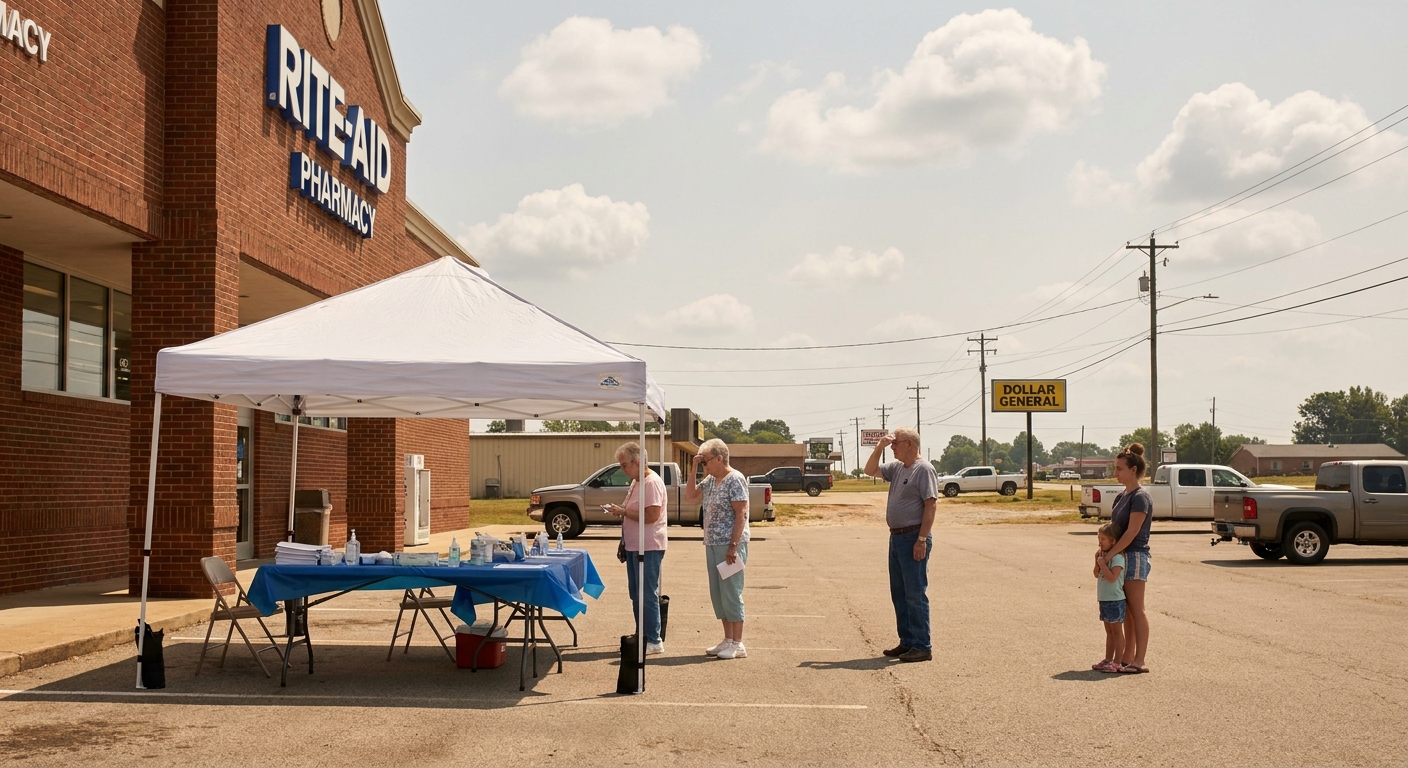
A Walgreens parking lot in Goldsboro will become a testing site for four hours on June 25, 2026—not because eastern North Carolina's public health system is thriving, but because what's left of it has learned to improvise[f1a]. The Lenoir County Health Department has partnered with the pharmacy chain to offer free HIV screening from 10:00 a.m. to 2:00 p.m., marking National HIV Testing Day in a region where years of hospital closures have turned single-day events into the standard of care[f1a]. Trained counselors will administer rapid tests in private areas at the Walgreens at 2202 Wayne Memorial Drive, with results in twenty minutes or less [f1a][f1b]. The event will offer services similar to previous years' events that also included syphilis and hepatitis C screening [f1b].
National HIV Testing Day, observed annually on June 27 since 1995, encourages people to get tested, know their status, and link to care and treatment. The 2026 theme is "Level Up Your Self-Love: Check Your Status," emphasizing self-compassion through screening. The Walgreens–Greater Than HIV partnership is the largest National HIV Testing Day event in the nation, having provided over 104,000 free HIV and STD tests cumulatively since 2011, with more than 575 Walgreens stores participating in 2025 alone[f4a].
The event represents a four-hour window in a county where 61.8% of residents live in rural areas, in a region that has watched health infrastructure steadily disappear. It's a partnership born not from innovation but from necessity.
Eight rural hospitals have closed in North Carolina since 2010. Five of those closures occurred in counties with higher shares of Black residents than the rural county average of 20%. As of 2024, 29% of rural hospitals in the state are vulnerable to closure, and 37% operate on negative margins. The closure of Vidant Pungo Hospital in Belhaven in 2014 left a 130-mile gap without an emergency room, requiring patients to travel up to 60–70 miles to the nearest hospital [f8b]. While no hospitals have closed in Lenoir County itself—UNC Health Lenoir in Kinston remains open—the county sits in a region where the safety net has frayed significantly [f8a]. The South accounts for two-thirds of all rural hospital closures nationwide, with Southern rural hospitals representing 77% of closures from 2013–2017 despite being only 38% of rural hospitals in 2013.
North Carolina's Medicaid expansion in December 2023 provided a critical lifeline, with over 670,000 previously uninsured adults gaining coverage and uncompensated care dropping to 2.7% in expansion states compared to 7.3% in non-expansion states. But that policy victory came after more than a decade of legislative resistance—years when hospital after hospital shuttered.
Lenoir County ranks among the top 20 counties in North Carolina for HIV infections [f7a]. Its population is 40.1% non-Hispanic Black or African American and 47.4% non-Hispanic white, with 21.9% of residents age 65 or older. HIV testing rates in rural eastern North Carolina are significantly lower than in urban areas—7.3% past-year testing prevalence compared to 13.5%. Barriers include lack of transportation, fewer testing sites, increased perceived stigma toward people living with HIV, and socially conservative views regarding sexual health. Rural populations in North Carolina tend to test later in the HIV disease course than urban populations, leading to poorer health outcomes, and gonorrhea rates are highest in the rural parts of the eastern coastal region. County health departments in rural North Carolina often do little to nothing regarding STD/HIV risk reduction and education, creating gaps that partnerships like this one are attempting to fill.
The Lenoir County Health Department, directed by Pamela Brown, provides free, confidential HIV testing alongside other STI services at its main facility in Kinston [f1c]. The department announced the Walgreens partnership via social media, promoting it as accessible screening for residents in and around the county. The model relies on corporate retail infrastructure to deliver what was once a core public health function—bringing testing to a familiar commercial location rather than a clinic that may feel intimidating or require navigation of a fragmented system. Walgreens has partnered with KFF's Greater Than HIV campaign since 2011, with testing partners onsite at more than 500 stores across 45 states, Washington, DC, and Puerto Rico in 2024 [f4a]. The arrangement lets health departments with shrinking budgets expand reach during a single high-visibility event, leveraging Walgreens' physical footprint and the campaign's operational capacity.
But it also clarifies who gets left out. The event runs on a Thursday in a four-hour window that excludes anyone working an inflexible daytime shift, anyone without transportation to Goldsboro, or anyone who cannot arrange childcare during those hours[f1a]. Testing is only the entry point—HIV care requires ongoing linkage to treatment, counseling, medication access, and long-term monitoring, none of which a one-day event can provide. Episodic screening, however well-intentioned, does not address the systemic need for routine testing integrated into primary care and reinforces the idea that HIV screening is exceptional rather than normal.
For the people who can make it to the Walgreens on Wayne Memorial Drive on June 25, the event offers something tangible: a free test, results in 20 minutes, a chance to know their status without cost or appointment [f1a][f1b]. In a region where hospital closures are measured in miles and hours, where stigma and transportation barriers suppress testing rates, and where rural health departments operate with skeletal resources, even a four-hour event counts as a win.
But the measure of what counts as a public health success has shifted dramatically—from sustained infrastructure to episodic intervention, from comprehensive care to stopgap access, from the system we need to the partnerships we can cobble together. That reality is both a testament to local agency and an indictment of the system that failed to sustain it.